


Energy-Efficient Luxury Home Upgrades That Reduce Long-Term Costs for Scottsdale Homes

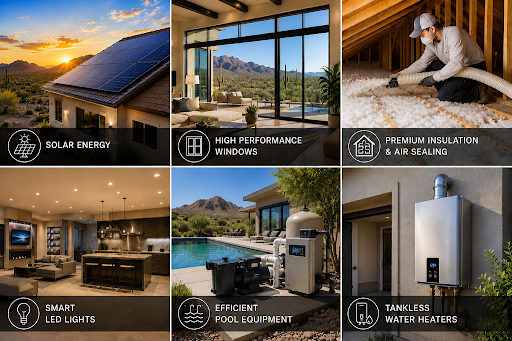
Picture a 6,000-square-foot home with floor-to-ceiling glass, a resort-style pool, and a chef's kitchen running four appliances at once. It's stunning. It's also the kind of home where a single poorly placed window or an oversized HVAC unit can quietly add hundreds of dollars to a monthly bill without anyone noticing why. That's the gap Energy-Efficient Luxury Home Upgrades in Arizona exist to close: comfort and scale on one side, cost and waste on the other.
Efficiency doesn't mean scaling back the vision. It means making sure the home works as hard as it looks.
The Hidden Cost of Scale
Bigger homes in Scottsdale come with bigger systems, and bigger systems amplify small mistakes. A standard house might barely notice a slightly undersized attic seal. A luxury home with cathedral ceilings and open-plan living will feel it in every room and pay for it every month.
This is really a planning problem before it's an equipment problem. Rooms that stay too hot, too cold, or too expensive to condition usually trace back to decisions made long before move-in: where the glass went, how the HVAC was sized, whether insulation matched the scale of the space.
Get those decisions right, and the home runs quietly in the background. Get them wrong, and no amount of smart thermostats fixes it later.
Where the Waste Actually Hides
Homeowners rarely think about these areas until the bills start arriving.
Oversized glass with the wrong rating. Big windows sell the view. Poor glass selection sells heat gain right along with it.
Insulation that wasn't scaled up. Open, tall spaces need more than a standard insulation package, otherwise conditioned air escapes faster than systems can replace it.
HVAC sized for square footage, not zones. A single system trying to cool a guest wing and a great room equally is rarely efficient at either.
Pool and outdoor equipment running on old settings. Pumps and heaters left on default schedules waste far more than most owners realize.
Lighting fixtures chosen for looks alone. A home with fifty fixtures on older bulbs adds up fast, even if each one seems minor.
Long hot water runs. Layouts that push water heaters far from primary bathrooms waste both water and energy waiting for hot water to arrive.
None of these are visible flaws. They're the kind of thing that only shows up on a utility bill, which is exactly why they're worth catching early.
The Upgrades That Actually Move the Needle
Every Scottsdale luxury home doesn't need every upgrade. But a handful consistently deliver the most value for the effort.
Windows and glass. Low-E coatings, better frames, and smart placement (large openings where they earn their keep, smaller ones where afternoon sun hits hardest) can cut heat gain substantially without sacrificing the views a luxury home is built around.
Insulation and air sealing. This is the least glamorous upgrade and arguably the most important one. A well-sealed, well-insulated shell means every other system works less to achieve the same comfort.
Zoned HVAC. Guest suites, home offices, and entertainment areas rarely need identical schedules. Zoning lets each space run on its own terms instead of one thermostat compromising for the whole house.
LED and smart lighting. Beyond the obvious energy savings, dimming, scheduling, and room-by-room control let a home feel layered and premium while using a fraction of the power older fixtures demand.
Solar-ready infrastructure. Not every owner wants panels on day one. But roof orientation, wiring paths, and equipment space are far easier to plan now than retrofit in five years.
Sustainable Doesn't Mean Scaled Down
There's a persistent myth that Sustainable Luxury Home Design in Scottsdale means trading warmth and detail for something plainer. In practice, it's closer to the opposite. Natural materials chosen for longevity, patios shaded well enough to reduce indoor cooling demand, and flooring that won't need replacing in a decade, these choices tend to look and feel more considered, not less.
A home built this way still reads as personal and refined. It just also happens to cost less to run.
Smaller Upgrades That Still Add Up
Alongside the bigger structural decisions, several smaller Eco-Friendly Luxury Scottsdale Home Upgrades pull real weight over time:
Smart irrigation that adjusts to weather instead of running on a fixed timer.
Cool roofing materials that reduce heat absorption in warmer climates.
Efficient pool pumps built for lower ongoing energy draw.
Tankless or high-efficiency water heating.
Shaded outdoor living spaces in Scottsdale that stay usable without pulling double duty on indoor cooling.
Exterior lighting on smart controls rather than dusk-to-dawn defaults.
Individually, each one is minor. Together, they're often the difference between a home that feels efficient and one that just looks efficient.
The Planning Window That Closes Fast
Here's the part that catches a lot of owners off guard: most of these upgrades are dramatically cheaper and easier to build in than to retrofit. Window placement, roof orientation for future solar, HVAC zoning, insulation grade, wiring for smart systems, and pool equipment location- once walls and ceilings are finished, every one of these becomes a bigger, messier, more expensive job.
This is where Luxury Green Home Design stops being a checklist added at the end and becomes part of the actual architecture. The best-performing Scottsdale luxury homes aren't the ones with the most add-ons. They're the ones where efficiency was part of the design conversation from the very first floor plan.
Matching Upgrades to How the Home Will Actually Be Used
Not every feature belongs in every home, and chasing all of them tends to overcomplicate a build without improving it. A family that entertains constantly gets more value from efficient outdoor lighting and pool controls than from an elaborate solar array they won't use for years. An owner who travels frequently may care far more about remote HVAC control and smart security lighting than about kitchen appliance efficiency.
The systems worth prioritizing first are usually the ones running hardest: heating and cooling, windows, water heating, and anything outdoors that runs on a timer. Get those right, and everything else becomes an easier, lower-stakes decision.
Before You Finalize the Plans
A few questions worth asking before construction locks in:
Which rooms will carry the heaviest daily energy use?
Where does the strongest sun exposure actually fall?
Is the HVAC system sized for zones, or just square footage?
Could the roof support solar later, even if it's not happening now?
Which of these choices become far more expensive to fix after move-in?
These aren't abstract questions. They're the difference between a home that performs the way it looks and one that quietly underdelivers for years.
Final Thoughts
A truly luxurious Scottsdale home should feel effortless, even when the desert heat is at its strongest. Smart energy planning helps preserve that comfort, protect long-term value, and keep the home performing beautifully behind the scenes. Bloomfield Builders brings those decisions into the design from the very beginning.


Comments